
Waking up Woke
Fly fishing and the sin of empathy
Just when you think you have fly fishing all figured out, someone invites you to fish a new river and you find yourself back at square one. Everything you know is wrong. Your perfect drifts through seams that would certainly hold fish on your home waters come up empty. Not for the first time in your life, you suck at fly fishing.
Psychologists might look at this situation and extol the virtues of autotelic activities with monotonically increasing difficulty.
Buddhists might tell you a story about beginner mind - asserting that there is purity and important beauty in the notional emptiness of the novice.
Philosophers, trying to impress you with their Latin, might bring up the tabula rasa, the blank slate that defines the start of all human endeavor.
And to be fair, the steep learning curve that comes along with this newfound incompetence can be exhilarating and motivating. But when you’re blanked on a river while people all around you catch trophy fish, it kinda sucks.
My host, a fishy dude who who has waded this river for decades, tried to tell me something important:
Fish don’t have hands.
It’s a funny sentence. I guess I dismissed it as conversational filler. But as it turns out, it’s also sage advice.
For complicated reasons, the Salmon River in upstate New York enjoys large spawning runs of non-native rainbow trout, aka steelhead.
Transplanted from their native Pacific Ocean, these fish spend most of their lives in the big water of Lake Ontario, where they grow strong and silver, just like their ocean-going cousins. Seeking gravel beds in which to spawn, they migrate from the lake to the skinny upstream waters of the Salmon River.
For some anadromous fish, spawning is a retirement project. They use the last of their life-force to run a gauntlet of anglers and dams and bears. If they make it upstream alive, they wallow out a comfortable looking spot in the gravel of a riverbed and they lay their eggs. Or if they’re boy-fish, they fertilize someone else’s eggs.
Then, the hard work of procreation done, they die.
Nature is metal that way.
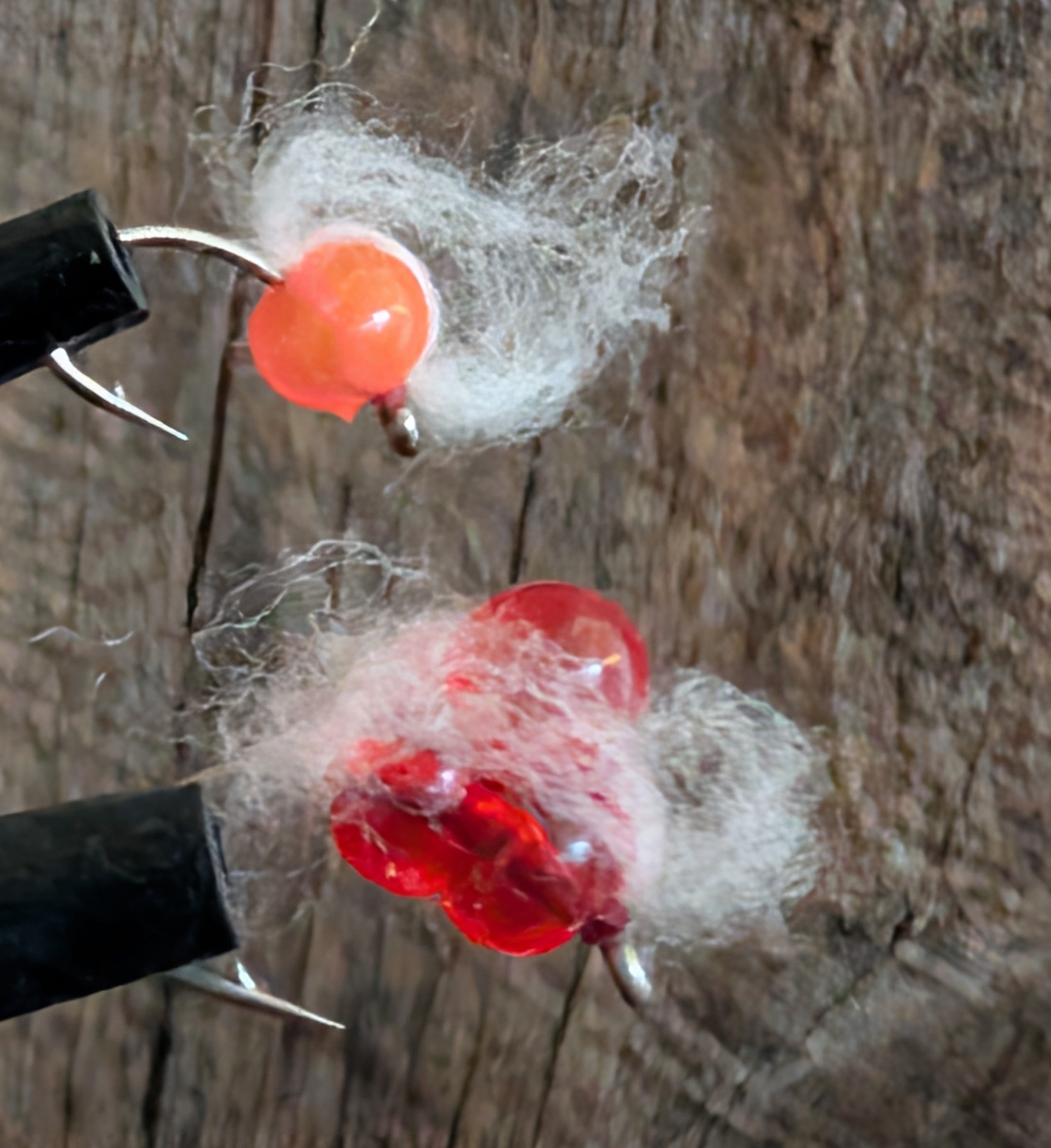
But the transplanted steelhead of lake Ontario don’t die after spawning. With a knowing smile on their fishy little faces, they swim back downstream. Some will do this roundtrip several times through the course of their life.
Horny bastards.
Apologies if you’re trying to give up empathy for narcissist-November, but this next bit takes some emotional imagination.
You wake up in a strange bed. You look around. Not your apartment. Clothing in disarray on the floor. Bedsheets tangled. A sexy lady trout in tired repose next to you. Eggs everywhere.
Fertilized eggs!
It was a rager and you’ve got a headache that won’t quit, but apparently you scored last night!
You pump your... fist. No, that’s not quite right. You pump your fin. Spawn City, population you!
You find your pants on the floor and pull them up, commando-style. With a knowing smile on your fishy little face you make your way down a foreign hallway to a tiny kitchen. You open the fridge. Inside it you find containers. Foil takeout boxes with inscrutable script on the lids. Could be house lo mein, could be cat food. You open a container, dip a finger in and give it a taste. Mmm. Green curry with what tastes like chicken! Spicy! You find a pair of chopsticks and tuck in.
You see what you did there? Confronted with gastronomic ambiguity, you used your hands, didn’t you?
Now, again with the empathy. Same bedroom. Same scene. Same post-coital peckishness. Only this time you’re a little less you, a little more fish. And instead of a hallway leading to the kitchen, it’s a river.
No foil takeout boxes, but you do see something bright and fluffy floating by on the current. Might be bug larvae or a minnow. Might be a delicious and nutritious bit of ikura. Or ew, it might be a goose turd. You tried goose turd once. Didn’t agree with you.
What’s a hungry fish to do? Remember, you don’t have hands.
You use your mouth! That’s where your taste buds and smell receptors are. That’s how you tell stone from stonefly, baitfish from bird shit.
As that suss little morsel floats by, you give it a lick to see if it’s food.
And that’s what my host on the Salmon River meant when he said fish don’t have hands.
These steelhead won’t always pounce on a nymph or a streamer as it drifts by. They’ll mouth it. Just a quick touch to check it out. That’s your chance. When your strike indicator pauses... subtly... that’s your cue. If you manage to set the hook just then, just as that fish investigates the suspicious morsel that is your fly, you might find yourself attached to a thirty-inch fish, surprised and feisty, pissed off that the treat it thought it was going to have for breakfast wasn’t food after all.
Most of the trout I catch when I’m indicator fishing probably catch themselves. I get distracted. I look around at birds, bugs, interesting rocks. Then when I feel a tug, I instinctively lift the tip of my fly rod and I have a fish on. I still get to say I caught a fish. But honestly, that’s generous.
It’s seductive to wait for an obvious and assertive eat. Trying to set your hook every time your indicator bobbles is disruptive. It takes your fly out of play. It can feel foolish to abruptly pull your line tight on empty water.
But foolish or not, that’s the best way to connect with one of these fish.
Experts describe steelhead as the fish of a thousand casts. I amend that old chestnut by offering that each cast is the cast of a dozen hook-sets.
I’m going back to the Salmon River soon. Putting in my time. Grinding.
The fish of twelve thousand hook-sets.
I’ll try to remember our little exercise in empathy. Fish don’t have hands. But I do. I should use them to set the damn hook!